

Keeping Your Cool: The Importance of AC Repair in Granbury, TX
When the scorching Texas heat hits, a broken air conditioner can quickly turn your home into an uncomfortable oven. For homeowners in Granbury, TX, dealing with HVAC breakdowns, unexpectedly high energy bills, or simply uncomfortable indoor temperatures is a common challenge. That’s why reliable ac repair in Granbury, TX is not just a convenience, but a necessity for maintaining your family’s comfort and health. A well-functioning AC system is vital to escape the relentless summer heat and ensure your home remains a cool, comfortable sanctuary, preventing unnecessary stress and discomfort.
For a complete overview of our services, visit our Granbury, TX HVAC Services page, or to schedule immediate service, Get Prompt AC Repair Service Now.
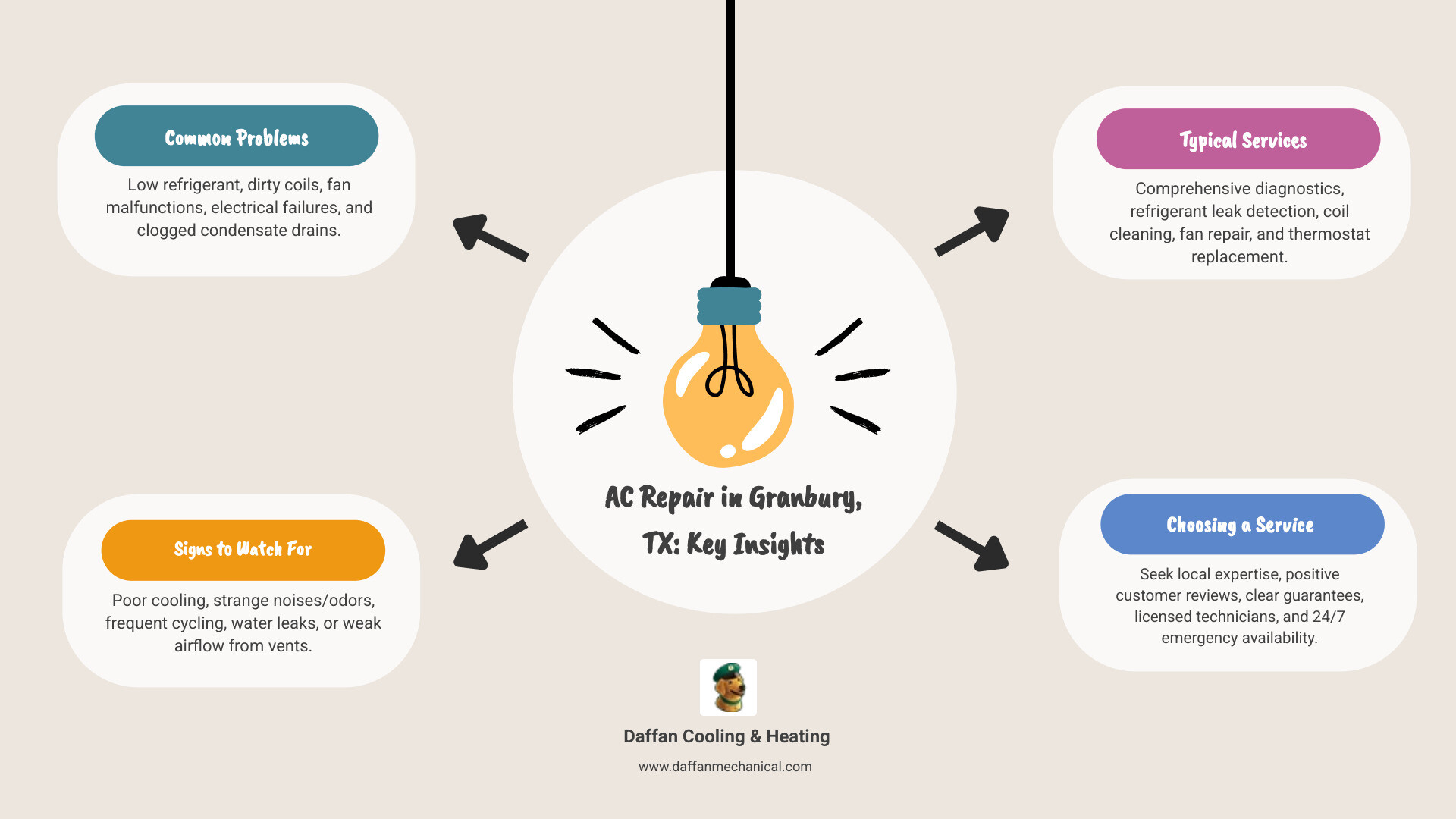
Here’s what you need to know about AC repair in Granbury, TX:
- Common AC Problems: Includes issues like low refrigerant, dirty condenser coils, fan malfunctions, electrical control failures, and clogged condensate drains.
- Signs Your AC Needs Repair: Watch for poor cooling, unusual noises, strange odors, frequent cycling, water leaks near the unit, or weak airflow from vents.
- Services Offered: Typical services include comprehensive diagnostics, refrigerant leak detection and recharge, coil cleaning, fan motor repair, and thermostat replacement.
- Emergency Services: Many local Granbury companies offer 24/7 emergency AC repair to address urgent breakdowns quickly.
- Finding a Reliable Company: Look for local expertise, positive customer reviews, clear service guarantees, and licensed, insured technicians.
Signs Your AC System Needs Professional Attention
Imagine this: the Granbury sun is beating down, and you walk into your home expecting a cool blast, only to be met with stale, warm air. This is just one of many signals your AC might be sending that it needs professional attention. Recognizing these signs early can save you from a complete system breakdown and potentially more expensive repairs down the line.
Here are some common indicators that your AC system is crying for help:
- Poor Cooling: This is perhaps the most obvious sign. If your AC unit is running but not effectively cooling your home, or if certain rooms remain warmer than others, it’s a clear sign of trouble. You might notice the system runs constantly but never reaches the temperature set on your thermostat. This indicates your system is struggling to maintain the desired temperature, making your home less of a refuge from the Texas heat and driving up your energy bills unnecessarily.
- Unusual Noises: AC units are designed to operate with a relatively consistent hum. If you start hearing strange sounds like grinding, hissing, buzzing, clanking, or squealing, it’s time to call in the experts. A grinding noise could signal a problem with the motor’s bearings, while a hissing sound often points to a refrigerant leak. Ignoring these auditory warnings can lead to a complete system failure. These noises often indicate mechanical issues, such as a failing motor, a loose component, or even a refrigerant leak.
- Strange Odors: A properly functioning AC system should produce clean, neutral-smelling air. Musty odors could point to mold or mildew growth within your ducts or evaporator coil. A burning smell might indicate an electrical problem, such as overheated wiring, which is a serious fire hazard. Neither is a scent you want lingering in your home.
- Frequent Cycling: Is your AC unit turning on and off more frequently than usual, or running for very short periods? This “short cycling” can be a symptom of several problems, including an oversized unit, a faulty thermostat, or low refrigerant. It not only fails to cool your home properly but also puts excessive wear and tear on your system, shortening its lifespan and increasing energy consumption.
- High Indoor Humidity: Your AC system doesn’t just cool your home; it also helps dehumidify the air. If your home feels clammy or sticky despite the AC running, it might not be effectively removing moisture. This can lead to discomfort, a stuffy feeling, and potential issues like mold growth on walls and furniture.
- Water Leaks Near Unit: While some condensation is normal, significant puddles or dripping water around your indoor or outdoor unit is not. This could be due to a clogged condensate drain line, a frozen evaporator coil, or a refrigerant leak. Water damage can be costly to repair, so if you notice a leak, it’s wise to turn off your AC immediately to prevent further damage to your home’s floors, walls, or ceilings.
- Weak Airflow from Vents: If the air coming from your vents feels weak or inconsistent, your system might be struggling. This could be caused by something as simple as a dirty air filter, or more complex issues like blocked ducts or problems with your blower motor. Inadequate airflow means your home won’t cool evenly or efficiently, leaving some rooms uncomfortably warm.
Ignoring these warning signs can lead to more severe damage and greater discomfort. When you notice any of these issues, it’s best to consult with professionals who can diagnose and resolve the problem efficiently. For comprehensive solutions to keep your home comfortable, explore our Air Conditioning Services.
Common AC Problems in the Granbury Climate
Living in Granbury, TX, means our AC systems work overtime, especially during the relentless summer. This constant demand puts unique stress on units, leading to a few common problems that homeowners frequently encounter. Understanding these issues can help you identify when it’s time for a professional ac repair in Granbury, TX.
Here are some of the most common AC problems we see in our region:
- Refrigerant Leaks: Refrigerant is the lifeblood of your AC system, absorbing heat from your home and releasing it outside. If your system is low on refrigerant, it’s not simply “used up”; there’s likely a leak. Signs of a refrigerant leak include a hissing sound, ice buildup on your evaporator coil, and your AC running constantly but failing to cool effectively. Because refrigerant is a chemical substance, handling it requires certified professionals to ensure it’s managed safely and in an environmentally responsible way. Texas summers demand peak performance, and a leak severely hinders that.
- Dirty Condenser Coils: The condenser coils, located in your outdoor unit, are responsible for releasing heat. Over time, dust, dirt, leaves, and even cottonwood fluff can accumulate on these coils, especially with our windy Granbury weather. When coils are dirty, they can’t efficiently dissipate heat, forcing your AC to work harder, consume more energy, and ultimately reduce its cooling capacity. This strain can lead to premature wear on the compressor, one of the most expensive components to replace. Keeping your outdoor unit clear of debris is a simple step you can take to help prevent this.
- Clogged Condensate Drain Lines: As your AC cools the air, it also removes humidity, producing condensation. This water collects in a drain pan and flows out through a condensate line. Algae, mold, and sludge can build up in this line, causing it to clog. When this happens, water can back up, overflowing the drain pan and potentially causing significant water damage to your ceilings, walls, and floors. You might notice standing water around your indoor unit or a musty odor, which are clear signs of a blockage.
- Frozen Evaporator Coils: While it might seem counterintuitive for an AC unit to freeze, it’s a common problem. A frozen evaporator coil (located inside your home) can be caused by restricted airflow (due to a dirty air filter or blocked vents), low refrigerant levels, or a malfunctioning blower fan. When the coil freezes, it forms a block of ice that prevents air from passing through, which means it can’t absorb heat. This leads to poor cooling and potential water leaks as the ice eventually melts.
- Malfunctioning Fans: Both the indoor blower fan and the outdoor condenser fan are crucial for your AC’s operation. The indoor fan circulates cool air throughout your home, while the outdoor fan helps dissipate heat from the condenser. If the indoor fan isn’t working, air won’t circulate through your home. If the outdoor fan fails, the condenser coils can’t shed heat, leading to overheating and potential compressor damage. Strange noises coming from either unit can often point to fan motor issues.
- Electrical Control Failure: Your AC system relies on a complex network of electrical components, including capacitors, contactors, and relays, to start and stop the unit’s various parts. Over time, these components can wear out or fail due to constant use, especially in a climate where the AC runs non-stop. This can lead to your AC not turning on, struggling to start, or short cycling. Electrical issues should always be handled by a qualified technician due to the risk of shock.
- Thermostat Issues: Sometimes, the problem isn’t with the AC unit itself but with the device controlling it. A faulty thermostat can misread temperatures, send incorrect signals to your AC, or simply fail to communicate, leading to erratic cooling or no cooling at all. This could be due to dead batteries, faulty wiring, or an outdated unit that needs upgrading. If you suspect your thermostat is the culprit, we can help with Thermostat Replacement Granbury, TX.
These issues are par for the course when dealing with the intense demands of the Granbury climate. Prompt diagnosis and professional ac repair in Granbury, TX are essential to keep your system running efficiently and your home comfortably cool.
The Big Decision: Repairing vs. Replacing Your AC Unit
When your air conditioner starts acting up, one of the biggest questions you’ll face is whether to repair it or invest in a brand-new system. This isn’t a one-size-fits-all answer, especially in a place like Granbury, TX, where a reliable AC is non-negotiable. We understand that this decision involves weighing several factors.
Here’s a table comparing key considerations for AC repair versus replacement:
| Factor | Consider Repair If… | Consider Replacement If… | | Unit age | If it’s less than 10 years old and the repair cost is reasonable.