
Introduction: Decoding Your Boiler’s Hum
A boiler is humming when internal components like the circulating pump, pressure valves, or fan create vibrations or sounds due to wear, incorrect settings, or trapped air. While a quiet hum during normal operation is common, a loud, persistent, or new humming noise often signals an underlying issue that needs attention.
Quick Answer: Why is My Boiler Humming?
- Faulty or worn pump bearings – The circulating pump may be wearing out or running too fast
- High or low water pressure – System pressure outside the ideal 1.5 bar range causes strain
- Trapped air in the system – Air bubbles create noise as they move through pipes and radiators
- Loose components – Vibrating panels, brackets, or pipes amplify sounds
- Limescale or sludge buildup – Mineral deposits restrict water flow and cause the heat exchanger to overheat
If you’re a homeowner in Granbury, TX, and you’ve noticed your boiler making an unusual humming sound, you’re not alone. This is one of the most common heating system complaints, especially as boilers age or when they haven’t been properly maintained. The good news is that many humming noises can be diagnosed and some can even be addressed with simple troubleshooting steps. However, because boilers involve both water and heat—and sometimes gas or electricity—it’s crucial to know when to step back and call in a professional.
For expert help with your heating system, learn more about heating services in Granbury or schedule a boiler inspection today.
This guide will walk you through the most common reasons your boiler is humming, what you can safely check yourself, and when it’s time to bring in a certified technician. Understanding your boiler’s sounds helps you maintain a safe, efficient, and comfortable home.
Why Your Boiler is Humming: Common Culprits Explained
When your boiler starts to hum, it’s often a subtle cry for help. While some soft, low-pitched humming might just be the normal operation of your system, a louder, more persistent, or new humming noise usually indicates a problem brewing beneath the surface. We’ve seen it all across Granbury, TX, and Hood County, and these are the most frequent reasons we find a boiler is humming.
Understanding these common culprits can help us pinpoint the issue and restore peace and quiet to your home. For more information on maintaining your heating system, explore our heating services.
The Heart of the System: The Circulating Pump
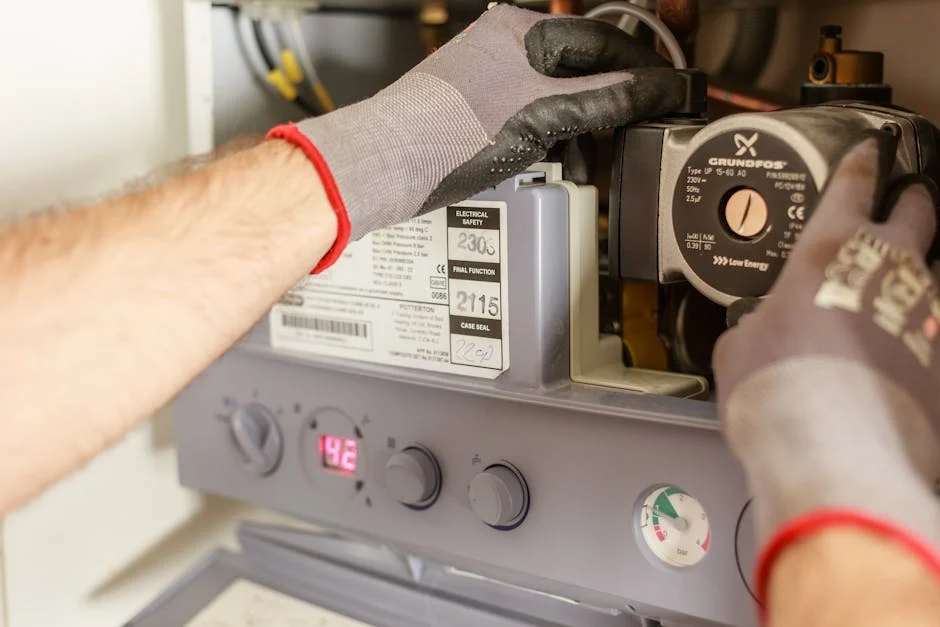
The circulating pump is the unsung hero of your boiler system, quietly ensuring that heated water flows efficiently through your pipes and radiators. When this vital component starts to falter, a distinct hum can often be the first sign.
One of the most common reasons a circulating pump might cause your boiler is humming is due to worn bearings. Over time, these bearings can deteriorate, leading to increased friction and a noticeable humming, buzzing, or even grinding sound. If you hear this noise, it might indicate that the pump is struggling to do its job.
Another factor is the pump’s speed setting. Some modern pumps have adjustable speeds. If the pump is set too high for your heating system’s requirements, it can cause excessive water flow, leading to vibrations and a humming noise. Imagine trying to run a marathon at a sprint—it puts a lot of strain on the system! For more on how these systems work, consider learning about heat pump systems.
Signs of a faulty boiler pump include:
- A persistent humming or buzzing sound.
- Grinding or gurgling noises from the pump itself.
- Inconsistent heating throughout your home.
- The pump feeling excessively hot to the touch.
- Leaks around the pump’s seals.
Under Pressure: The Role of Water Pressure
Water pressure plays a critical role in your boiler’s performance and quiet operation. Just like Goldilocks, your boiler prefers its pressure to be “just right.”
The ideal pressure range for most boilers is typically around 1.5 bar. In terms of pounds per square inch (psi), a healthy boiler should never have a pressure higher than 15 psi during normal operation. We’ve seen many homeowners in Granbury, TX, overlook this crucial detail.
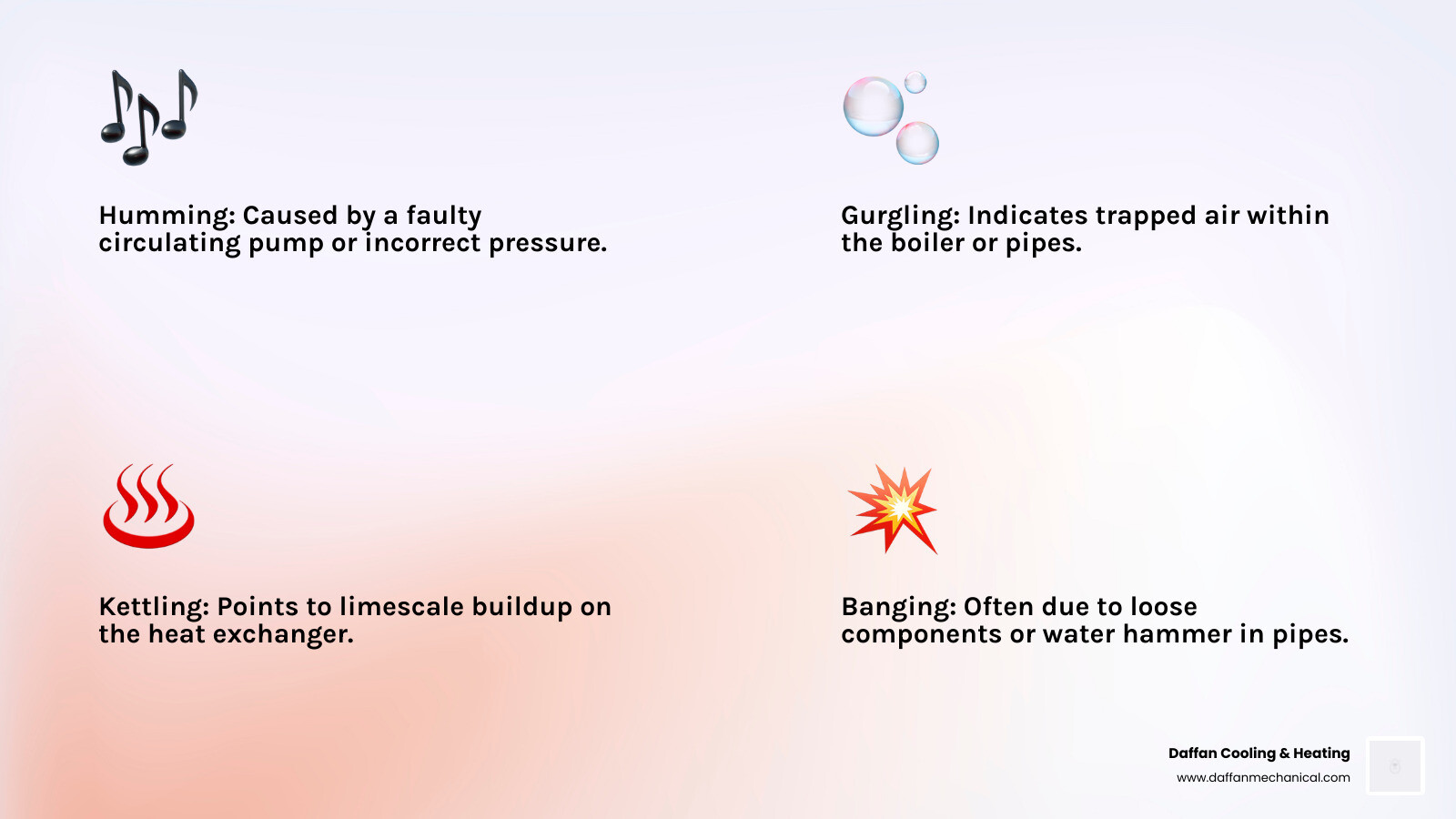
If the water pressure in your system is too high, it can put excessive strain on the components, causing valves to hum or pipes to vibrate. This can lead to a loud, persistent humming noise. Conversely, if the pressure is too low, the boiler might struggle to circulate water effectively, leading to overheating. Overheating can cause pipe expansion and contraction, which can also manifest as humming or banging sounds. It’s a delicate balance!
Trapped Air and Mineral Buildup
Your boiler circulates water, and sometimes, air can get trapped within the system, forming what we call an “airlock.” These air bubbles can cause a variety of unsettling noises as they move through your pipes and radiators, including gurgling and, yes, a distinct humming. If you have cold spots on your radiators even when the heating is on, trapped air is a likely culprit.
Another common issue, particularly in areas with hard water, is the accumulation of mineral deposits. We’re talking about limescale and sludge. Limescale buildup on your boiler’s heat exchanger acts like a blanket, preventing efficient heat transfer. This can cause the water inside to overheat and even boil, leading to a “kettling” noise – a whistling or banging sound reminiscent of a boiling kettle. This restricted water flow can also cause undue strain on the system, contributing to a humming noise. Sludge, a mixture of rust and debris, can also accumulate, blocking pipes and reducing efficiency, again adding to the stress on the boiler and generating noise. Regular maintenance, including air duct cleaning, can help ensure overall system health, though internal boiler cleaning is a specialized task.
A Homeowner’s Guide to Troubleshooting a Humming Boiler
Hearing your boiler is humming can be unsettling, but before you panic, there are several simple troubleshooting steps you can take. These DIY checks are designed to help you identify the problem and, in some cases, even resolve it yourself. Safety first! Always turn off your boiler and allow it to cool before attempting any internal inspections. Basic tools like a radiator key and a screwdriver might be useful. However, if at any point you feel unsure or uncomfortable, or if the problem persists, it’s always best to stop and call a professional.
Here’s a list of steps you can take:
- Check the boiler’s pressure gauge.
- Bleed your radiators to release trapped air.
- Inspect for loose components around the boiler.
Step 1: Check the Boiler’s Pressure Gauge
This is often the quickest and easiest check. Your boiler’s pressure gauge is usually located on the front panel or side of the unit.
- Locating the gauge: Look for a circular dial or a digital display on your boiler.
- Reading the pressure: Note the reading. For most residential boilers, the ideal operating pressure when the system is cold should be around 1 to 1.5 bar (approximately 12-15 psi). When the system is hot and running, the pressure might rise slightly, but it should generally not exceed 2 bar or 15 psi.
- What high pressure means: If your gauge reads significantly above 1.5-2 bar (or 15 psi), you have high pressure. This can cause humming as the system tries to relieve the excess pressure, sometimes through an expansion vessel or pressure relief valve.
- What low pressure means: If the pressure is below 1 bar (or 12 psi), your system’s pressure is too low. This can prevent the boiler from functioning correctly and may also lead to humming or other noises due to strain or overheating.
If you suspect thermostat issues are contributing to your heating problems, consider exploring thermostat replacement options.
Step 2: Bleed Your Radiators to Release Trapped Air
Trapped air is a common cause of humming and gurgling. Bleeding your radiators is a straightforward process that can often resolve this.
- Preparation: Ensure your heating system is turned on and running for about 10-15 minutes. This helps push any trapped air to the top of your radiators.
- Turn off the boiler: Switch off your boiler and wait for the radiators to cool down. This prevents scalding hot water from escaping.
- Locate the bleed valve: On each radiator, you’ll find a small valve, usually at the top corner.
- Bleed the radiator: Place a cloth or towel underneath the valve and have a container ready to catch any water. Use a radiator key (a small, square-ended tool) to slowly turn the valve anti-clockwise. You should hear a hissing sound as air escapes.
- Close the valve: Once water starts to come out steadily (without any air), close the valve by turning it clockwise.
- Repeat for all radiators: Go through each radiator in your home, starting with the ones furthest from the boiler. Pay special attention to any radiators that have cold spots at the top.
- Check pressure after bleeding: After bleeding all radiators, recheck your boiler’s pressure gauge. It will likely have dropped, so you may need to repressurize your system according to your boiler’s manual.
Step 3: Inspect for Loose Components
Sometimes, the simplest explanation is the right one. Vibrations from the boiler’s internal workings can be amplified by loose external panels or mounting brackets, creating a humming noise that echoes through your home.
- Visual inspection: Carefully examine the exterior casing of your boiler. Are all panels securely fastened? Gently press on them to see if the humming noise changes or stops.
- Tighten screws: If you find any loose panels or covers, use a screwdriver to gently tighten the screws. Be careful not to overtighten.
- Check mounting brackets and pipes: Inspect how your boiler is mounted to the wall and how the pipes are secured. If pipes are vibrating against walls or other components, or if mounting brackets are loose, these vibrations can transmit noise throughout your home. In some cases, a small piece of rubber insulation can help dampen pipe vibrations.
- Listen closely: While the boiler is running (if it’s safe to do so), try to gently push on different parts of the casing or pipes to see if the humming temporarily ceases or changes pitch. This can help you isolate the source of the vibration.
When to Call a Professional for a Boiler That is Humming
While some troubleshooting can be done by homeowners, there are clear limitations to DIY fixes, especially when it comes to a complex appliance like a boiler. Knowing when to call in a professional is not just about convenience; it’s about safety, efficiency, and protecting your investment.
If you’ve gone through the basic troubleshooting steps and your boiler is humming persists, or if you encounter any of the following, it’s definitely time to reach out to a qualified HVAC technician. For immediate concerns, remember our team is ready to help with emergency HVAC repair in Weatherford, TX, and surrounding areas.
Why a professional should investigate if your boiler is humming
Boilers, especially those that use gas, are intricate systems that should only be serviced by licensed professionals. Here’s why bringing in an expert is crucial:
- Safety risks: While a humming noise itself isn’t always immediately dangerous, it can be a symptom of underlying issues that pose serious risks. For instance, problems with combustion or ventilation could lead to carbon monoxide leaks, which are odorless, colorless, and highly toxic. A professional can detect these hazards. Additionally, persistent issues can lead to water leaks, potentially causing significant water damage to your home.
- Complex diagnostics: Many causes of humming, such as worn pump bearings, electrical malfunctions, or internal component failures, require specialized tools and expertise to diagnose accurately. A professional can identify the exact faulty part and recommend the correct repair.
- Warranty protection: Attempting complex repairs yourself can void your boiler’s warranty, leaving you responsible for costly future repairs. Licensed technicians ensure that all work is performed according to manufacturer specifications.
- Specialized tools and training: HVAC professionals have the necessary training and specialized equipment to safely and effectively work on boilers, ensuring the job is done right the first time.
The Importance of Regular Boiler Maintenance
Prevention is always better than cure, and this holds especially true for your boiler. Regular maintenance is key to preventing those unsettling humming noises and ensuring your system runs smoothly and efficiently for years to come. Boilers are typically expected to last between 10-15 years, but consistent maintenance can help them reach the higher end of that lifespan.
Here’s how annual tune-ups benefit you:
- Prevents humming noises: During a maintenance check, a technician can identify and address minor issues like loose components, early signs of pump wear, or pressure imbalances before they escalate into noticeable humming.
- System efficiency: A well-maintained boiler operates more efficiently, which means lower energy bills for your Granbury home. Technicians clean internal components, check for blockages, and ensure all parts are working optimally.
- Longevity: Regular servicing extends the lifespan of your boiler by catching and fixing small problems before they cause significant wear and tear on the entire system.
- Catching problems early: Annual inspections allow professionals to spot potential issues like limescale buildup or failing components that could eventually lead to humming, banging, or even a complete breakdown.
Don’t wait for your boiler to start singing the blues! Consider joining our maintenance club to ensure your heating system receives the regular care it needs.
Frequently Asked Questions about a Humming Boiler
We understand that a humming boiler can raise many questions. Here are some of the most common inquiries we receive from homeowners in Hood County.
What are the first signs of a faulty boiler pump?
A faulty boiler pump often announces its decline with a variety of unusual sounds and performance issues. Beyond a general humming, watch out for:
- Loud or persistent humming: A low, steady hum is normal, but if it becomes louder, more aggressive, or changes pitch, it’s a red flag.
- Grinding or buzzing: These sounds indicate internal friction, often from worn bearings.
- Inconsistent heating: If some radiators are hot while others are cold, or if your home isn’t heating evenly, the pump might not be circulating water effectively.
- Leaks around the pump: Any visible water drips or puddles near the pump indicate a seal failure.
- Reduced efficiency: Your boiler might be working harder to heat your home, leading to higher energy bills.
Can a humming boiler be dangerous?
While a simple humming noise isn’t always immediately dangerous, it’s crucial to treat it as a warning sign. The danger lies in what the hum might be indicating. For example:
- Potential for leaks: Issues causing humming, such as high pressure or worn components, can eventually lead to leaks, which can damage your property or, if left unchecked, potentially lead to electrical hazards.
- Carbon monoxide risk: While less common for a humming noise directly, any internal boiler malfunction, especially if related to combustion or ventilation, can increase the risk of carbon monoxide leaks. This highly toxic gas is undetectable by smell or sight, making working carbon monoxide detectors essential.
- Escalation of problems: Ignoring a persistent hum can lead to more severe and costly breakdowns, potentially leaving you without heat during the colder months in Granbury, TX.
Therefore, while you might not need to call 911 immediately, we strongly recommend a professional inspection to ensure your safety and the longevity of your system.
How do I know if my boiler is humming as part of normal operation?
A healthy boiler pump will typically emit a low, steady humming sound as it circulates water. This is a normal operational noise and usually nothing to worry about. The key is to differentiate between this background hum and a problematic one.
Consider these factors:
- Consistency: Is the hum always the same pitch and volume? Or does it fluctuate, get louder, or change character?
- Newness: Did the humming start recently, or has your boiler always made this sound? New noises are always a cause for concern.
- Vibrations: Is the humming accompanied by noticeable vibrations in the boiler casing, pipes, or even through the walls?
- Other symptoms: Is your boiler heating effectively? Are there any leaks, pressure drops, or error codes displayed?
If the humming is loud, persistent, new, or accompanied by any other unusual symptoms, it’s likely not normal operation. Trust your instincts; if it sounds “off,” it probably is.
Conclusion: Restore Peace and Quiet to Your Home
A boiler is humming can be more than just an annoyance; it’s often a signal from your heating system that something isn’t quite right. We’ve explored the most common reasons behind this unsettling sound, from a struggling circulating pump and fluctuating water pressure to trapped air and the silent threat of mineral buildup.
We’ve also empowered you with actionable DIY troubleshooting steps, such as checking your boiler’s pressure gauge, bleeding your radiators, and inspecting for loose components. These simple checks can often resolve minor issues and help you understand your system better.
However, we cannot stress enough the importance of knowing when to call in the professionals. For issues involving complex internal components, electrical systems, or anything related to gas, a licensed HVAC technician is not just recommended, but essential for your safety and the longevity of your boiler. Ignoring these warning signs can lead to more serious problems, higher repair costs down the line, and potential safety hazards.
At Daffan Cooling & Heating, we’re committed to ensuring the comfort and safety of homes across Granbury, TX, and Hood County. If your boiler continues to hum, or if you’re ever unsure about any aspect of your heating system, don’t hesitate to reach out. Our experienced team is ready to diagnose the problem accurately and provide reliable solutions. Let us help you restore peace and quiet to your home.
For comprehensive support and expert care for your heating system, explore our expert heating services.