

Why Your AC Deserves a Little Love (and a Checklist)
An AC service checklist keeps your system running smoothly, saves you money on energy bills, and helps you avoid emergency breakdowns during the hottest days in Granbury, TX. Here’s what every homeowner should know:
Essential AC Service Checklist Tasks:
- Monthly: Check and replace air filters
- Seasonal (Spring): Clean outdoor unit, clear debris, test cooling function
- Seasonal (Fall): Clean outdoor unit, switch thermostat mode, check heating system
- Year-Round: Listen for unusual noises, inspect vents for airflow, clear condensate drain
- Annual: Schedule professional tune-up for refrigerant check, electrical inspection, and deep cleaning
When Texas temperatures climb into the triple digits, your air conditioner isn’t just a luxury—it’s essential. But here’s the thing: most AC breakdowns happen on the hottest days, right when you need your system most. The good news? A simple, regular AC service checklist can prevent most of those emergency calls, extend your system’s lifespan by years, and slash your energy bills by up to 25%.
For personalized guidance on maintaining your system, check out our complete HVAC services, or if your AC needs immediate attention, schedule a repair or tune-up with Daffan Cooling & Heating today.
Whether you’re a hands-on homeowner or prefer to leave it to the pros, this guide breaks down exactly what to check, when to check it, and which tasks you can tackle yourself versus when to call in a certified technician.
Why Regular AC Maintenance is a Must for Texas Homeowners
Living in Granbury, TX, and the surrounding Hood County areas, we understand the critical role your AC plays in maintaining comfort. Just like your car needs regular oil changes, your AC system thrives on consistent care. Neglecting it isn’t just about facing a sweltering summer; it has real, tangible consequences for your wallet, your comfort, and even your health.
Here’s why incorporating an AC service checklist into your home routine is non-negotiable:
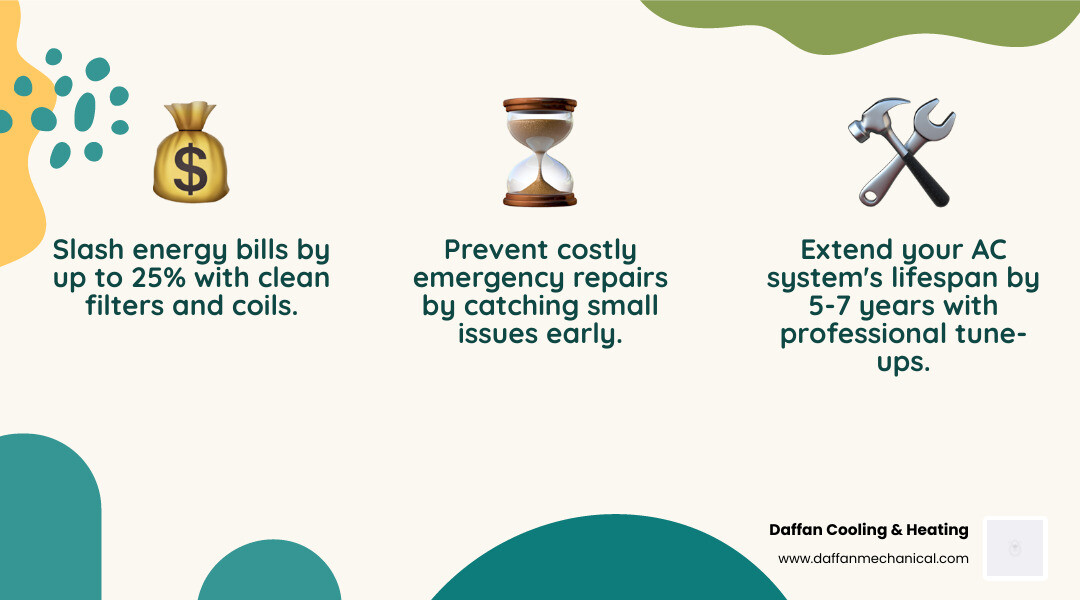
- Lower Energy Bills: This is often the first benefit homeowners notice. A well-maintained system doesn’t have to work as hard to cool your home. For example, replacing a clogged air filter with a clean one can lower your AC’s energy consumption by up to 15 percent. Overall, well-maintained systems use up to 25% less energy, translating to significant savings on your monthly utility bills.
- Improved Efficiency: When your AC unit is clean and all its components are working in harmony, it operates at peak efficiency. This means it cools your home more effectively and consistently, preventing those uncomfortable hot and cold spots.
- Fewer Costly Repairs: Regular maintenance allows us or you to catch small issues before they snowball into major, expensive breakdowns. Think of it as preventive medicine for your AC. For instance, a dirty evaporator coil can lead to ice buildup, which if ignored, can cause severe damage. Addressing these minor problems early saves you from emergency repair costs.
- Longer Equipment Lifespan: An AC system is a significant investment. By keeping it in top shape, you can significantly extend its operational life. Regular maintenance can add 5-7 years to your system’s lifespan, ensuring you get the most out of your investment before needing a premature replacement.
- Improved Indoor Air Quality: Your AC system circulates air throughout your home. When filters are dirty or ducts are leaky, it can introduce dust, allergens, and pollutants into your living space. Clean filters and well-maintained ductwork mean cleaner, healthier air for your family. If you’re concerned about the air you breathe, consider our air quality testing services.
- Improved Safety: For systems that also handle heating (like heat pumps or central HVAC systems), maintenance includes checking electrical connections and gas lines. Faulty electrical connections can cause unsafe operation, while issues with gas lines can pose serious health and safety risks. Regular checks help ensure all components operate safely.
So, while the Texas heat might be relentless, your AC doesn’t have to struggle against it. A little proactive maintenance goes a long way in keeping your home breezy and your wallet happy.
The Ultimate DIY AC Service Checklist
Alright, let’s get down to business! While some tasks definitely require a professional touch, there’s a lot you, as a homeowner, can do to keep your AC humming along happily. We’ve put together a comprehensive AC service checklist for your DIY efforts. Safety first! Always turn off the power to your AC unit at the breaker box before inspecting or cleaning any components.
Indoor Unit Checklist: Simple Tasks for Big Gains
The indoor unit, often located in your attic, closet, or basement, handles the air circulation and cooling within your home. Here’s how you can show it some love:
- Thermostat Settings:
- Inspect and Test: Make sure your thermostat is working correctly. Is it level and properly secured to the wall? Adjust the temperature settings to ensure the system responds as expected.
- Consider an Upgrade: If you have an older, non-programmable thermostat, upgrading to a programmable or smart thermostat can save you up to 10% on heating and cooling bills annually by optimizing your system’s operation.
- Checking and Cleaning Air Vents:
- Inspect Airflow: Grab a lightweight piece of yarn or toilet paper. Hold it in front of your supply vents (where cool air comes out). If it flutters and goes nearly horizontal, you have good airflow. For return vents (where air is pulled in), the tissue should be sucked against the grille.
- Keep Vents Open: It’s a common misconception that closing vents in unused rooms saves energy. In reality, it can create pressure imbalances in your ductwork, leading to leaks and making your system work harder. Keep all vents and registers completely open and unobstructed for optimal airflow.
- Clean Regularly: Dust and vacuum around your supply and return registers frequently to prevent debris from being pulled into your system.
- Changing the Air Filter: This is arguably the most crucial DIY task on your AC service checklist!
- Locate Your Filter: It’s usually in your indoor air handler or behind a large return air grille.
- Check Monthly: Inspect your filter monthly. If it looks dirty, change it!
- Replacement Frequency: Depending on your filter type, home environment (pets, allergies, construction), and system usage, you might need to change it every 1-3 months. Wider 4-inch media filters can last up to a year, but check them regularly.
- Correct Installation: Make sure the replacement filter has the correct MERV rating and size for your system. Always follow the arrows on the new filter to ensure it matches the direction of airflow.
- Benefits: A clean filter ensures good airflow, reduces strain on your system, improves indoor air quality, and lowers energy consumption by up to 15 percent. If you need help choosing the right filter or want to explore options, check out our air filtration services.
- Clearing the Condensate Drain Line:
- Locate and Inspect: The condensate drain line removes moisture from your indoor unit. Locate the drain pan and the PVC pipe leading away from it.
- Check for Blockages: Inspect for any visible blockages or standing water in the pan. A plugged drain can cause water damage in your home and affect indoor humidity levels.
- Clear if Needed: If you notice a blockage, you can often clear it with a shop vac or a stiff brush. Pouring a cup of distilled vinegar mixed with water down the line every few months can also help prevent algae buildup.
Outdoor Unit Checklist: Clearing the Way for Cool Air
Your outdoor unit, or condenser, is a workhorse, transferring heat from inside your home to the outside. Here’s what you can do to help it breathe easy:
- Clearing Debris:
- Remove Obstructions: Clear leaves, sticks, grass clippings, and any other yard debris from around the outdoor unit. Aim for at least two feet of clear space on all sides to ensure proper airflow.
- Mow Carefully: When mowing and using a weed whacker, be mindful of the unit. A simple stone from a lawn mower can damage refrigerant lines, leading to costly repairs.
- Cleaning Condenser Coils:
- Initial Rinse: With the power safely off, use a garden hose to gently rinse off any dirt and debris from the outside of the coil fins.
- Deep Cleaning (Caution): For a deeper clean, you can use specialized coil-cleaning chemicals (available at hardware stores) and follow the manufacturer’s instructions.
- Inspect Fins: Carefully inspect the delicate aluminum fins for any bends or damage. You can gently straighten bent fins with a fin comb (a specialized tool) to improve airflow.
- Pet Owners Beware: If you have pets, especially male dogs, be aware that dog urine can cause permanent damage and corrosion to outdoor AC coils, leading to leaks. Consider installing a small fence or barrier around the unit to protect it.
- Ensuring Unit is Level: Check that your outdoor unit’s concrete pad or platform is firm and level. If the pad has shifted or cracked, it can affect the unit’s operation and potentially damage internal components over time.
- Checking Refrigerant Lines for Damage: Visually inspect the copper refrigerant lines that run between your indoor and outdoor units. Look for any signs of damage, kinks, or leaks. Also, check the insulation around the larger line (the suction line). If the insulation is missing or damaged, it can lead to condensation and reduced efficiency, and even hidden mold growth indoors.
By regularly performing these DIY tasks, you’ll not only contribute to your AC’s efficiency and longevity but also become more familiar with your system, making it easier to spot potential issues early on.
Seasonal Tune-Ups: Your Spring & Fall AC Checklist
Just like we Texans adjust our wardrobes for spring and fall, your AC system needs a seasonal refresh to perform its best. Taking the time for these seasonal tune-ups, whether DIY or professional, is a critical part of your AC service checklist. It ensures your system is primed for the intense cooling demands of summer and ready to support your heating needs in winter.
Spring Startup Tasks
Spring is the perfect time to get your AC ready for the long, hot summer ahead. Scheduling your AC tune-up in early spring, before temperatures soar, means you’ll beat the rush and ensure your system is ready when you need it most.
- Remove Outdoor Cover: If you covered your outdoor unit for the winter, remove the cover to allow proper airflow.
- Clean Around the Outdoor Unit: As we discussed in the DIY section, clear away any leaves, branches, or debris that accumulated over winter. Trim back any overgrown shrubs or plants, maintaining at least two feet of clearance.
- Check Thermostat Batteries: Replace the batteries in your thermostat to avoid unexpected shutdowns during the peak cooling season.
- Test Cooling Function: Turn on your AC system to “cool” mode and set the temperature lower than your current indoor temperature. Listen for normal startup sounds and feel for cool air coming from your vents. Let it run for about 15-20 minutes to ensure it’s cooling properly.
- Schedule Professional Tune-Up: This is crucial. Even with your DIY efforts, a professional spring tune-up is essential. A certified technician will perform a comprehensive inspection, checking refrigerant levels, electrical connections, cleaning coils thoroughly, and much more. This proactive step can prevent mid-summer breakdowns and ensure your system operates at maximum efficiency. If you’re considering a new unit, we also offer AC installation services to ensure you’re ready for the heat.
Fall Shutdown Prep
As the cooler weather approaches in Granbury, TX, it’s time to shift focus from cooling to heating. Preparing your AC system for fall and winter helps protect it from the elements and ensures a smooth transition to heating season.
- Clean Outdoor Unit (Again): Give your outdoor unit one last cleaning before winter. Remove any fallen leaves or debris that might have accumulated.
- Cover Outdoor Unit (Optional): While not strictly necessary for all units, some homeowners choose to cover their outdoor condenser unit to protect it from harsh winter weather, especially if it’s exposed to heavy snow or ice. Ensure the cover allows for some ventilation to prevent moisture buildup.
- Check Heating System: If you have a heat pump, it will be working throughout the winter. Make sure to schedule a professional heating check-up to ensure it’s ready for the cold. For furnace owners, it’s the perfect time to test your heating system and consider a professional furnace tune-up. We provide comprehensive heating services to keep you warm.
- Switch Thermostat Mode: Change your thermostat from “cool” to “heat” mode. If you have a programmable thermostat, adjust your heating schedule for the colder months.
- Prepare for Winter: For heat pumps, they work year-round. A fall tune-up ensures it’s ready to efficiently switch between heating and cooling.
By consistently performing these seasonal tasks, you’re not just taking care of your AC; you’re taking care of your entire home comfort system, ensuring it’s ready for whatever the Texas weather throws its way.
DIY vs. Professional Service: Knowing When to Call in the Experts
We’ve covered a lot of ground on what you can do yourself, and we commend your dedication to maintaining your home’s comfort! However, it’s crucial to understand that not all AC maintenance tasks are created equal. Some require specialized tools, training, and knowledge that only a professional HVAC technician possesses. Knowing when to tackle a task yourself and when to call in the experts is a key part of any effective AC service checklist.
Here’s a quick comparison:
| DIY Tasks (Homeowner) | Professional Tasks (Technician) |
|---|---|
| Change air filter regularly | Check and adjust refrigerant levels |
| Clear debris from around outdoor unit | Inspect and tighten electrical connections |
| Clean outdoor condenser coil (gentle rinse) | Lubricate moving parts (internal motors, bearings) |
| Test thermostat functionality and replace batteries | Test and calibrate system controls and safety mechanisms |
| Check for airflow from vents | Thoroughly clean evaporator and condenser coils (deep cleaning) |
| Clear condensate drain line (basic unclogging) | Examine ductwork for leaks and seal them effectively |
| Listen for unusual sounds and smells | Inspect heat exchanger (for heating systems) for cracks or corrosion |
| Inspect refrigerant line insulation for damage | Measure amperage and voltage for all components |
| Ensure outdoor unit is level | Check temperature split for system performance |
| Visual inspection for obvious issues (e.g., ice) | Comprehensive system diagnostics and troubleshooting |
Your Go-To DIY AC Service Checklist
For the hands-on homeowner, here’s a concise AC service checklist of tasks you can confidently perform regularly:
- Change Air Filter Monthly: Or at least inspect it monthly and change every 1-3 months, depending on usage and environment. This is the simplest and most impactful DIY task!
- Clean Around Outdoor Unit: Keep the area clear of leaves, grass, and debris. Maintain at least two feet of clearance.
- Check Vents for Airflow: Use the yarn or tissue test to ensure cool air is flowing freely from supply vents and being drawn into return vents. Keep all vents open.
- Listen for Unusual Noises: Pay attention to any new or strange sounds coming from your AC. Early detection can prevent bigger problems.
- Clear Condensate Drain: Regularly check the drain pan and line for blockages and clear them to prevent water damage.
- Inspect Refrigerant Line Insulation: Look for damaged or missing insulation on the larger copper line running from your outdoor unit.
Signs It’s Time for a Professional AC Service Checklist
While your DIY efforts are invaluable, there are definitive signs that indicate it’s time to call in the professionals. Attempting to fix these issues yourself can be dangerous, void warranties, or cause further damage.
- Strange Noises: If you hear banging, clanking, grinding, hissing, or persistent squealing, it’s a clear sign something is wrong internally. These could indicate motor issues, refrigerant leaks, or loose components.
- Weak Airflow: If the air coming from your vents feels weak, even after changing your filter and clearing obstructions, your system might have a deeper issue with the blower, ductwork, or even refrigerant levels.
- Warm Air: The most obvious sign! If your AC is blowing warm or lukewarm air, it could be due to low refrigerant, a faulty compressor, or other serious problems.
- Moisture or Leaks: Puddles or excessive moisture around your indoor unit are not normal. This could be a clogged condensate drain (beyond a simple DIY fix), a refrigerant leak, or a damaged pan.
- High Humidity: Your AC should dehumidify your home. If your house feels clammy or overly humid, even when the AC is running, it indicates an issue with its cooling or dehumidification capabilities.
- AC Won’t Turn On or Off: If your system fails to start or continuously runs without cycling off, it points to a problem with the thermostat, electrical components, or internal controls.
- Frequent Cycling (Short Cycling): If your AC turns on and off too frequently, it’s “short cycling.” This is inefficient, wears down components quickly, and often indicates an undersized unit, a refrigerant issue, or a faulty thermostat.
- Ice Buildup: Ice on your evaporator coil (indoor unit) or copper refrigerant lines (outdoor unit) is a strong indicator of an airflow problem or low refrigerant. While you can defrost it, the underlying cause needs professional diagnosis.
- Increasing Energy Bills: If your energy bills are steadily climbing without a change in usage, your AC is likely struggling and losing efficiency.
When these signs appear, it’s time to call a trusted HVAC professional like us at Daffan Cooling & Heating. We have the expertise and specialized equipment to diagnose and resolve complex issues safely and efficiently. For immediate concerns, don’t hesitate to reach out for emergency HVAC repair or our standard AC repair services.
Frequently Asked Questions about AC Maintenance
We hear a lot of great questions from homeowners in Granbury, TX, and the surrounding areas about AC maintenance. Here are some of the most common ones, along with our expert answers:
How often should I really change my air filter?
This is probably the most asked question on any AC service checklist! While a general rule of thumb is every 1-3 months, the truth is, it depends on several factors:
- Filter Type: Standard 1-inch fiberglass filters might need changing monthly. Pleated filters can last 2-3 months. Wider 4-inch media filters can often last up to 6-12 months.
- Pets: If you have furry friends, their dander will clog your filter faster. Check monthly, change every 1-2 months.
- Allergies/Asthma: If anyone in your home suffers from allergies or respiratory issues, more frequent changes (monthly) are recommended to maintain optimal indoor air quality.
- Home Environment: Homes in dusty areas, or those undergoing renovation, will require more frequent filter changes.
- System Usage: If your AC runs almost constantly during the scorching Texas summer, your filter will get dirty faster than if you use it sparingly.
- Constant Fan Use: If you run your fan continuously (even when not actively cooling), it will pull more air through the filter, requiring more frequent changes.
Our Recommendation: Check your filter monthly. If it looks dirty, change it. It’s far better to change it too often than not often enough. A clean filter is a happy AC!
What do strange AC noises mean?
Your AC unit usually makes a consistent, low hum. Any deviation from that is your system trying to tell you something. Paying attention to these sounds is a crucial part of your AC service checklist.
- Hissing: This often indicates a refrigerant leak. Refrigerant is a pressurized gas, and a hiss can be the sound of it escaping. This is an environmental concern and needs immediate professional attention.
- Buzzing: A buzzing sound can point to electrical problems, loose fan blades, or malfunctioning parts. If it’s accompanied by flickering lights or a burning smell, turn off the unit immediately and call for service.
- Clanking or Banging: These loud, metallic noises often suggest a loose or broken part inside the compressor or air handler. It could be a fan blade hitting something or a component coming loose.
- Squealing or Screeching: A high-pitched squeal often means there’s an issue with a motor bearing that needs lubrication or replacement, or a problem with the fan belt if your system has one.
Never ignore strange noises from your AC. They are often early warnings that can prevent more extensive and expensive repairs if addressed promptly. For any unusual sounds, especially those listed above, we recommend calling a professional. Even for specialized systems like ductless AC services, strange noises warrant a professional check.
Can I save energy by closing vents in unused rooms?
This is another common misconception! While it seems logical, closing vents in unused rooms actually does more harm than good for most central AC systems. Here’s why:
- Air Pressure Imbalance: Your AC system is designed to operate with a specific amount of airflow across the evaporator coil. Closing vents restricts this airflow, creating an imbalance in air pressure within your ductwork.
- Duct Leaks: The increased pressure can force air out through tiny leaks, holes, and poorly connected ducts (which account for about 20 to 30 percent of air loss in typical duct systems). This means you’re losing conditioned air into unconditioned spaces like your attic or walls, wasting energy. If you suspect issues with your ducts, our ductwork services can help.
- System Strain: Your blower motor will have to work harder against the increased static pressure, leading to premature wear and tear on components, reduced efficiency, and potentially higher energy bills.
- Coil Freeze-Up Risk: Reduced airflow can cause the evaporator coil to get too cold and freeze up, leading to serious system damage.
Our Recommendation: Keep all your supply and return vents open. If you want to customize temperatures in different rooms, consider a zoned HVAC system or ductless mini-splits, which are designed for that purpose without compromising your central system’s efficiency.
Keep Your Cool with Consistent Maintenance
As we steer the hot Texas climate in Granbury, TX, and surrounding Hood County, a reliable air conditioning system isn’t just a comfort—it’s a necessity. By following this comprehensive AC service checklist and understanding the importance of both DIY efforts and professional tune-ups, you’re investing in the longevity, efficiency, and safety of your home’s most vital comfort system.
Regular maintenance translates into:
- Peace of mind: Knowing your system is prepared for anything.
- Consistent comfort: Enjoying reliably cool air throughout your home.
- Significant savings: Lower energy bills and fewer expensive emergency repairs.
- Extended lifespan: Getting the most out of your AC investment for years to come.
At Daffan Cooling & Heating, we are committed to providing reliable, top-rated HVAC services based on Christian values, with over 25 years of experience serving our community. Our expert technicians are ready to help you with any part of your AC service checklist, from routine maintenance to complex repairs.
Don’t wait for a scorching summer day to find your AC needs attention. Take proactive steps now to ensure your home remains a breezy haven.
Ready to schedule your professional tune-up or need expert assistance with your AC? Schedule professional air conditioning service with Daffan Cooling & Heating today. We’re here to keep you cool and comfortable!